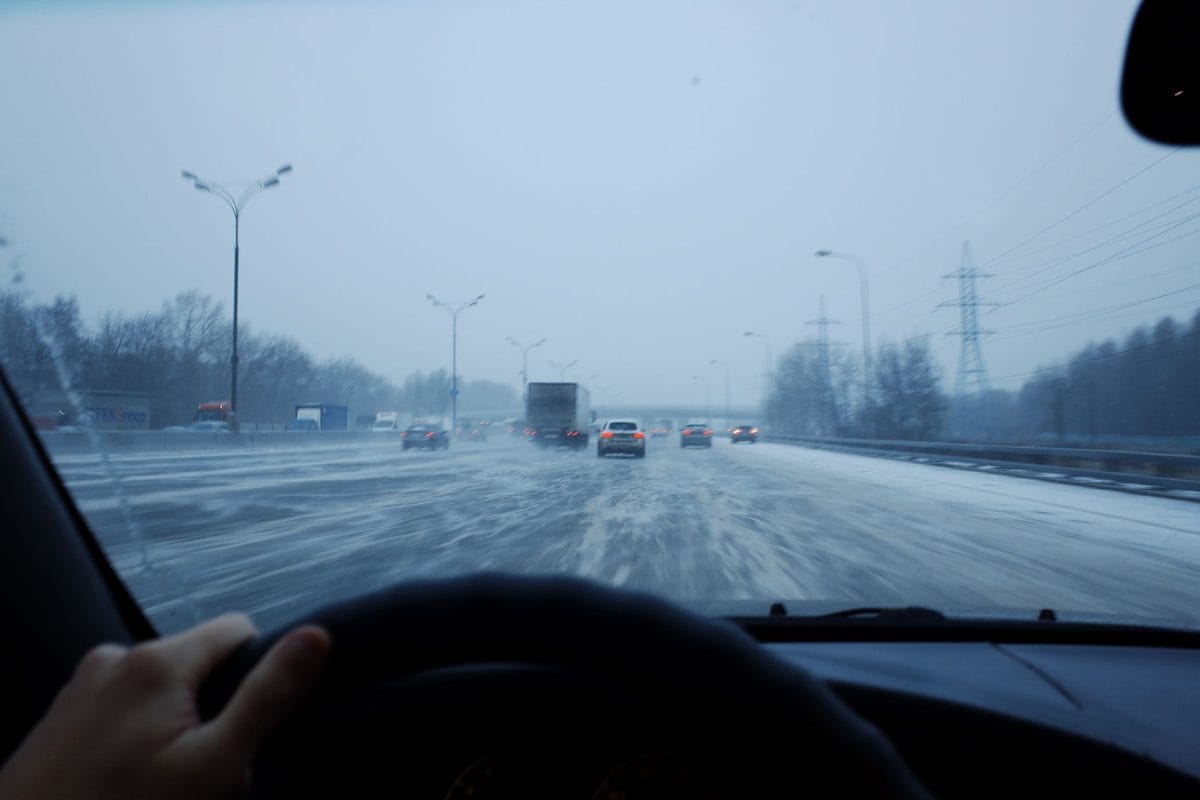
Why the first icy morning is a claims problem
In most of the UK the first proper frosts arrive in November, and the first icy morning is when many minor skids happen. Black ice forms on bridges, in shaded lanes and on the last few metres of a slope before the sun reaches it. It gives no warning until the rear end steps out. Most drivers who slide into a gatepost that morning were not reckless; they misjudged a surface they could not see. What matters afterwards is what the policy pays, and that depends on the level of cover you bought rather than on the weather. The sections below cover what each common cover level does after a skid, whether snow and ice affect your cover, and where claims get challenged.
What your policy pays after a skid
Most UK motor policies come in three levels. Third party only pays for injury to other people and damage to their property, but not for your own car. Third party, fire and theft adds cover for fire and theft, yet accident damage to your own car is normally still excluded. Fully comprehensive is the level that usually pays for accidental damage to your own car, less the excess, whoever was at fault. Terms vary between insurers, so read the policy schedule and the cover summary rather than the headline price. If your car is worth more than the excess you could afford to pay, fully comprehensive is the level to buy.
| Cover level | Other driver's car and injuries | Your own car after a skid into a wall |
|---|---|---|
| Third party only | Usually paid | Usually not paid |
| Third party, fire and theft | Usually paid | Usually not paid, except fire and theft |
| Fully comprehensive | Usually paid | Usually paid, less the excess |
The excess is where a skid claim often stops making sense. A £250 excess on a £400 bumper repair leaves you paying £250 yourself. A fault claim on a comprehensive policy can also count against your no-claims discount, so work out the net figure before you ring the insurer. In most UK skid collisions the driver who lost control is treated as at fault, though each claim is judged on its own facts. If you hit another car, your liability cover is what pays the other driver, and it does not repair your own car.
Does snow or ice invalidate your policy?
Usually not. Age UK's guidance says that driving in snow does not invalidate a car policy on its own, because the weather is not a breach of the policy. Insurers look at two other things: the condition of the car and the way you drove. A claim can be challenged if the vehicle was unroadworthy, or if the driver ignored conditions the Highway Code tells drivers to deal with first. A windscreen not cleared of ice is the obvious example. Clearing the car properly is therefore part of keeping a claim intact, not just a courtesy to other road users.
Worn tyres: the claim that gets challenged
The legal minimum tread depth for cars in Britain is 1.6mm, and that depth has to hold across the central three-quarters of the tread, around the whole circumference. One illegal tyre counts as one offence, with fines of up to £2,500 and three penalty points per tyre. Winter tyres are not legally required anywhere in the UK, so the law applies to whatever you run in January. Legal and safe are not the same thing, though. A tyre at 2mm passes the MOT and still loses grip on wet ice.
Insurance is a separate test. Insurers often rely on a roadworthy-vehicle condition, and the Financial Ombudsman has upheld declines where bald tyres contributed to a crash, because the defect caused or added to the loss. In other decisions it overturned declines where the tyre problem was not connected to the claim. One breakdown case went the policyholder's way on exactly that point. The FCA rules on rejecting consumer claims, known as ICOBS 8, work the same way, as one ombudsman decision summarises them: a breach of condition is not a reason to refuse a claim unless it is connected to the loss. The insurer has to show the breach mattered.
What if the tyre was legal but half-worn?
That is the grey area, and the honest answer is that the law and the insurer both accept a tyre while it is above 1.6mm. The safer habit is to replace at 3mm. Tyre safety advice commonly treats 3mm as the point to replace, which is advice rather than law, but it is the figure to follow on ice. A 3mm tyre will still struggle on sheet ice, but it leaves a margin that a 2mm tyre does not.
Winter tyres: do you have to tell the insurer?
Most insurers do not charge extra for winter tyres when they meet the manufacturer's specification and are fitted properly. Whether you must declare a change of tyres varies by insurer, and the sources I checked disagree. Age UK's guidance reports that its underwriters do not need notification, while other guidance tells drivers to check first. Call the insurer or read the policy documents before you fit a set, and keep the fitting invoice. An undeclared change is the kind of gap that turns a simple claim into a dispute.
What to do before the first icy morning
Most of the protection comes from routine checks, and they take a few minutes in the dark on a driveway. These are the ones worth doing before the first frost:
- Clear every window, the mirrors and all lights of snow and ice before moving off, as the Highway Code requires.
- Check tread across the whole width of each tyre, not just one groove, using a gauge; the 20p coin test is only a rough check.
- Allow for stopping distances that can be up to ten times longer than on a dry road, and test your grip gently in a safe place before you need it.
- Keep a scraper, de-icer, a torch and a charged phone in the car.
- After any skid, photograph the car, the road surface and the scene the same day, because the insurer will ask for them first.
After the skid: what the claim file needs
The claim is won or lost in the first day, mostly on paperwork rather than on the car. Most policies require you to notify the insurer promptly, and a late report gives the insurer an argument you did not need to give it. Write down the date, the time, the exact location, the temperature if you know it, and whether the road was gritted. If another vehicle was involved, take the other driver's name, registration, phone number and insurer, and do not agree liability at the roadside, since many policies ask you to leave that to the insurer. If anyone is hurt, report it to the police; damage-only incidents usually do not need a call, but a witness who saw the skid is worth a name and number.
Keep the evidence the insurer will test. Photographs of the car, the kerb or wall, and the surface help show that the loss was an accident on ice rather than a driver who was going too fast for the road. A receipt for the last service and a current MOT certificate matter if the insurer questions the car's condition. Tyre tread readings taken the same week, from a gauge rather than a memory, are the evidence that matters if the tyres are challenged.
The Financial Ombudsman has also made clear that the insurer carries the burden on a condition-based refusal. In one stolen-car case it said the insurer had to show that a breach was material to the loss, and found it had not. A skid claim is no different: a worn tyre on the other side of the car, unconnected to the slide, should not be enough on its own to refuse payment. You can still escalate through the Financial Ombudsman if the insurer disagrees with you, but the complaint is stronger when the photographs and tyre readings are already on file.
The wording is the part you can check this week
On an icy morning the policy is only as good as the tyres it was driven on and the wording you bought. Nobody can change the weather, and no insurer will promise that a skid is covered in advance. What you can do is read the excess, the cover level and the roadworthiness condition before the frost arrives, while there is still time to change them.