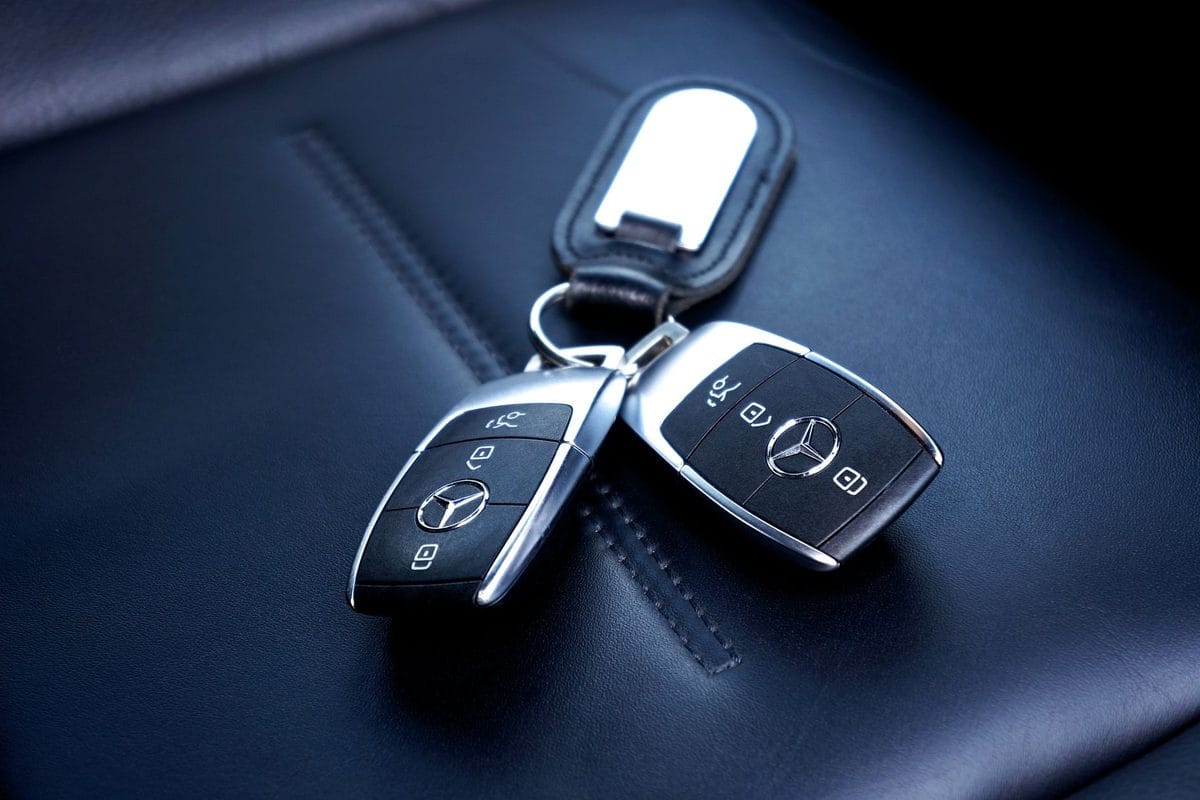
It is 11 pm on a November night. The hall light is off, the front door is locked, and the car key sits in a dish on the console table, a metre from a glass panel. For a growing share of car thefts in the UK, that is all a thief needs to know. They do not break a window or pick a lock. They only have to get close enough to the house for the car to believe the key is nearby.
How a relay attack actually works
A keyless car constantly listens for a radio signal from its fob. Relay theft needs two people. The first stands near the house with a receiver that picks up the fob's signal from wherever the fob sits indoors. The second stands at the car with a transmitter that repeats that signal, and the car responds as if the key were in your pocket. The fob never has to leave your hall, which is why a car can disappear from a driveway that was locked and quiet all night. Police guidance on this is consistent: keep fobs away from doors and windows, and store them somewhere a signal cannot easily reach.
What the 2026 law changes, and what it does not
The Crime and Policing Act 2026 received Royal Assent in spring 2026. It creates new offences of possessing, importing, making or selling electronic devices used in vehicle theft, which is the section Thatcham Research highlights in its own summary of the Act. That matters for the people who supply the equipment, and it gives police a clearer charge against someone found carrying relay kit. It does not change anything on your driveway. The new offences target the kit, not the car you park tonight, so they do nothing to protect it on a given night. Treat the Act as a measure against supply, and keep your own security as your responsibility.
The long-run picture is better than the headlines
Vehicle-related theft in England and Wales peaked at 1,549,000 recorded offences in the year ending December 1992. By the year ending September 2025 it had fallen to 324,094, a drop of 79%, according to ONS police recorded crime data as cited by Thatcham Research. That is a long decline, and it is worth knowing before you read a news story that calls every new year a crisis. The fall is real, but it is an average across the whole country. It tells you very little about the street you live on, or about the one device that makes your particular car easy to take.
What your insurer will want to know
Relay theft is usually covered, but the policy wording decides what a claim looks like. Some policies ask you to keep and produce every set of keys, and some expect you to have taken reasonable care of the car. Those phrases are vague on purpose, so a claim can turn on what you did before the theft rather than on the theft itself. Check the section on keys and security in the policy document, not the summary on the comparison site. If it says you must keep all keys, find the spare you have not used in two years and put it somewhere you can reach it. A missing spare is one of the easiest ways for a valid claim to become an argument. Ask the insurer one plain question before winter: is relay theft covered on this policy, and what security do you need to have in place? Ask for the answer in writing, because a phone call saying "that's fine" is hard to hold them to later.
The pouch question
A signal-blocking pouch will not make your car unstealable.
It does block the fob's signal while the key is inside, and it is cheap compared with almost any other step. Police guidance recommends one, and it is the simplest way to show that you took reasonable care. The catch is that not every pouch on sale blocks the signal, so buy from a known brand rather than the cheapest listing. Keep the receipt with the policy documents. No source I could find says insurers require a pouch, so treat it as evidence of care rather than a condition of cover, and do not assume it changes the claim on its own. It also does nothing for a car parked on the road with no drive at all, which is where many owners now leave theirs.
A garage is not automatically safer
Many owners assume a closed garage solves the problem, and it helps less than people expect. A relay receiver works through the same signal path whether the car sits on the drive or in a garage, so the question is how close the fob is to the outside wall. If the garage shares a wall with the house, the fob on the kitchen hook is just as reachable as it would be on the drive. If you keep a car in a detached garage, the same logic applies to the spare fob you leave in the house, which is often the one nobody thinks about. The garage door remote is worth checking too. If the door came with the house, find out whether the remote is still in use by a previous owner. A garage is a sensible place to park, but it only works as a layer of security if the keys are stored with the same care as they would be on the drive. Treat it as one barrier among several, not the answer on its own.
Second cars and households with more than one key
Households with two cars and a spare set of fobs have more places for a key to go astray. The second fob is often in a bag by the door, a coat pocket, or a drawer that nobody has opened in months, and that is exactly where it is least visible to the people who need to account for it. When an insurer asks for every set of keys, a household that has never listed them is at a disadvantage. Write down how many fobs each car has, where each one is kept, and who has used them in the last year. A short note in the policy folder takes five minutes and saves an argument later. Keep the list with the receipts for the pouches and steering locks so it is in one place. If a fob goes missing, update that note the same day, not at the next renewal.
If the car is taken anyway
Report the theft to the police first and keep the crime reference number, because the insurer will ask for it. Then call the insurer and give them the number and the details of every set of keys. Do not hand over a spare you have not yet accounted for, and do not guess at the number of keys in the house. If a key is missing, say so at the start, rather than having it come up later in the claim. Insurers handle lost keys every week, and an honest early answer usually gets a faster result than a correction made three weeks in.
What to change this week
Start with the place, not the product. Move the key out of the dish by the front door and into a drawer in the kitchen or bedroom, away from any wall that faces the street. Then check whether your car's keyless system lets you turn off passive unlocking in the settings or the handbook, because some models allow it and some do not. If the car lives on the road, a steering lock is still worth the money, and it is visible to a thief in a way a pouch is not. Keep the fob, the spare and the receipts in the same place, so they are easy to find when a claim form asks for them.
The dish by the front door is the first thing to change. It takes four seconds to move the key, and it is the only step on this list that costs nothing.