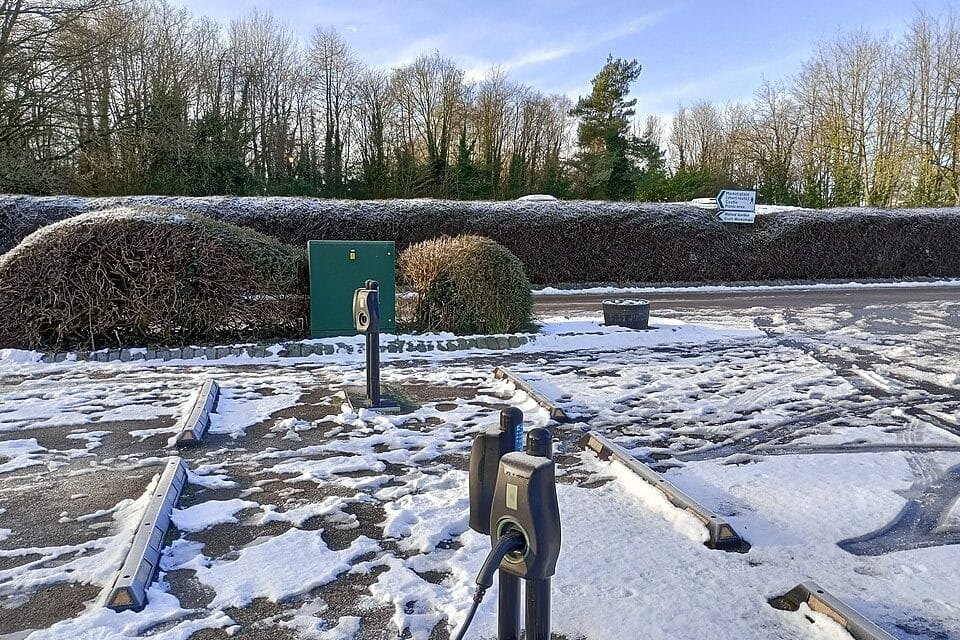
Ask anyone who has just swapped a five-year-old Ford Focus for a Kia EV6 what surprised them most about the switch, and the answer usually isn't range anxiety or the tangle of charging apps on their phone — it's the renewal quote that landed a few weeks later, often £250 to £400 higher than the petrol car it replaced. Electric vehicles are supposed to be the cheaper option once you're past the sticker price, and on fuel and servicing that's broadly true. On insurance, in the middle of 2026, it still isn't, and the reasons have very little to do with how carefully EV owners drive.
Why the switch to electric doesn't bring the insurance bill down with it
Insurers price a policy against the cost of a claim, not against how green the car looks on paper. And an EV claim is, on average, a more expensive event to resolve than the equivalent petrol claim — sometimes dramatically so. A scraped rear bumper on a Vauxhall Corsa might be a same-day bodyshop job costing a few hundred pounds. The same knock on a Tesla Model 3 or an MG4 can trigger a full diagnostic scan of the battery pack, a check on the high-voltage wiring that runs the length of the chassis, and a wait for parts that simply aren't stocked at the local Kwik Fit. None of that is the driver's fault, but all of it lands on the premium. Then there's the battery itself, which behaves nothing like an engine when it comes to underwriting. A damaged combustion engine can usually be repaired, rebuilt, or swapped for a reconditioned unit at a fraction of the cost of a new one. A battery pack that's been compromised in a collision — even a fairly minor one — is frequently treated as a total loss by manufacturers' own repair guidelines, because nobody wants to certify a pack that might have internal cell damage as safe to drive away. Replacing one on a mid-range EV can run into five figures, and insurers know this, price for it, and pass the difference straight through to the customer.
The battery is the elephant in the room
It's worth being blunt about this rather than dancing around it: battery risk is the single biggest reason EV premiums sit above petrol ones, full stop. Every other factor — parts availability, specialist labour, charging cable theft — matters, but none of them individually moves the needle the way a written-off battery pack does. A Nissan Leaf involved in what would be a £1,500 repair on a petrol supermini can become an £8,000-£12,000 claim once the pack is flagged for inspection, and if the manufacturer's own protocol says "replace, don't repair," the insurer has no real choice but to pay out. This is also where the picture gets more interesting than a flat "EVs cost more" headline suggests. Newer EVs from manufacturers who've invested properly in modular battery design — Hyundai's E-GMP platform underneath the Ioniq 5 and Kia EV6 is the clearest UK example — are increasingly repairable at the module level rather than needing a whole-pack swap, and insurers who've caught up with that engineering detail are starting to price those models more competitively than older EVs on older platforms. So the blanket "EVs cost more to insure" line is true on average but increasingly wrong for specific, well-designed models, and it's worth checking which side of that line your own car falls on. Ask your insurer or broker directly whether they underwrite your specific EV platform differently — some do, most still don't bother to ask the question.
Repairs, ADAS calibration and the parts bottleneck nobody warned you about
Even setting the battery aside, electric cars carry sensors, cameras and driver-assistance systems that petrol cars from the same era often don't, and each one needs recalibrating after even a modest body repair. Replace a windscreen on a Polestar 2 or a BYD Seal and the forward-facing camera behind it has to be recalibrated to spec before the car is legally roadworthy for its automatic emergency braking and lane-keep systems — a specialist job, not something a high-street glass fitter bolts on for £40 extra.
- Approved-repairer networks for EVs are thinner on the ground than for petrol cars, so parts and labour both take longer to source
- Many EV bodyshops require manufacturer-specific high-voltage safety training before technicians can even open the bonnet
- Genuine EV parts — battery modules, inverters, motor units — often come from a single overseas supplier with lead times measured in weeks rather than days, and courtesy car costs pile up while the customer waits
Adrian Flux, one of the UK's better-known specialist motor insurers, has built a chunk of its EV book specifically around this problem — matching drivers to insurers who already have manufacturer-approved repair networks in place rather than scrambling to find one after a claim is opened. That's a genuinely useful thing to ask about before you buy a policy, not after.
Which insurers are actually worth comparing right now
Not every insurer treats EVs the same way, and the gap between the cheapest and most expensive quote for an identical car and driver profile can be startling — often £300 or more a year for exactly the same risk on paper. Direct Line, Aviva and LV= have all expanded dedicated EV underwriting teams over the past two years and tend to price newer, well-established models like the Model 3, Ioniq 5 and EV6 reasonably competitively. Admiral and Hastings Direct are worth a look too, particularly for drivers under 35 who'll otherwise get hit by the same age-related loading that applies to petrol cars.
Where it gets genuinely useful is with pay-per-mile providers. By Miles and similar schemes make sense for EV owners who mostly charge at home and do short, local mileage — plenty of second-car EV households fit that description exactly — because you're not subsidising the mileage of drivers who commute 15,000 miles a year on the same flat premium. It won't suit everyone, and if you're doing regular long motorway runs it usually works out more expensive than a standard annual policy, so run the numbers for your actual mileage before switching.
Practical ways to actually bring the premium down
None of this means EV owners are stuck paying whatever quote lands first. There are concrete levers that make a real difference, and most of them take under half an hour to action.
Use the manufacturer's approved repair network
Insist your policy routes any claim through the manufacturer's approved bodyshop network rather than a generic third-party garage. It costs nothing extra to ask for at renewal, and it directly reduces the insurer's claims-cost risk on your specific car — which is the exact thing they're pricing against.
Consider telematics, even if you skipped it on the petrol car
A black box or app-based telematics policy — ingenie and Marmalade both do EV-friendly versions aimed at newer or younger drivers — can shave 10-20% off a quote for someone with a clean record, because it gives the insurer real driving data instead of a guess based on postcode and age. Most EV drivers dismiss telematics as something for teenagers in a first car, but the regenerative-braking data an EV app collects is arguably more useful to an underwriter than the equivalent petrol data ever was.
Ask about a battery-only rider or capped-value cover
Some specialist insurers, Adrian Flux among them, now offer a separate battery-cover rider with an agreed value cap, which can bring the base premium down because the insurer isn't carrying open-ended replacement risk on the most expensive single component in the car.
Get home charger cover added, not left as an afterthought
A home wallbox is rarely covered automatically under standard buildings insurance, and it's an expensive thing to lose to a lightning strike or a faulty installation. Add it explicitly to your motor or home policy — most insurers will do it for a few pounds a year once you ask, but very few volunteer it upfront.
Take a recognised EV driver-training course
A handful of insurers, including some through the IAM RoadSmart EV-specific course, offer small discounts for drivers who complete accredited training on regenerative braking and one-pedal driving technique — genuinely relevant risk factors for someone used to a normal petrol clutch-and-brake habit, and cheap to complete. It typically takes an afternoon and costs less than a single month's premium, which makes it one of the better-value discounts on this list.
What the FCA's current rules mean for how you shop and pay
The FCA's Consumer Duty, in force since July 2023 and still the backbone of how insurers are expected to behave through 2026, requires firms to demonstrate their pricing represents fair value for the actual risk carried — not just whatever the market will bear. That matters for EV owners specifically because it gives you a legitimate basis to challenge a renewal quote that's jumped sharply with no change in your driving record: ask the insurer, in writing, to explain what changed in the underlying risk assessment. Firms are required to be able to answer that question properly now, and a surprising number of policyholders never bother to ask.
If you're paying monthly rather than annually, keep an eye on the APR on that instalment plan — the FCA has been scrutinising premium finance charges, and a pricier EV policy makes a bad APR cost more in absolute terms than it would on a cheaper petrol policy. Ringing round for a straight annual-payment quote first is worth the ten minutes it takes.
Where this is heading over the next couple of years
The gap between EV and petrol premiums is not fixed in stone, and it's already narrowing for specific models rather than across the board. As more EVs reach the age where independent, non-manufacturer bodyshops build up genuine expertise and battery module-level repair becomes standard rather than exceptional, claims costs on those specific cars should keep falling — the Nissan Leaf, now well into its second decade on UK roads, is a reasonable preview of what that looks like once an EV platform matures. Newer, less common imports without an established parts and repair network in the UK will likely stay expensive to insure for a while yet, simply because insurers price uncertainty, and uncertainty is exactly what a five-month-old model with two approved bodyshops in the whole country represents.
For now, the honest advice is to shop the market properly rather than accepting the first renewal quote, ask directly about battery-cover riders and approved-repair routing, and treat telematics as a live option even if you dismissed it for your last petrol car. The premium gap is real, but a good chunk of it is negotiable if you know which questions to ask.