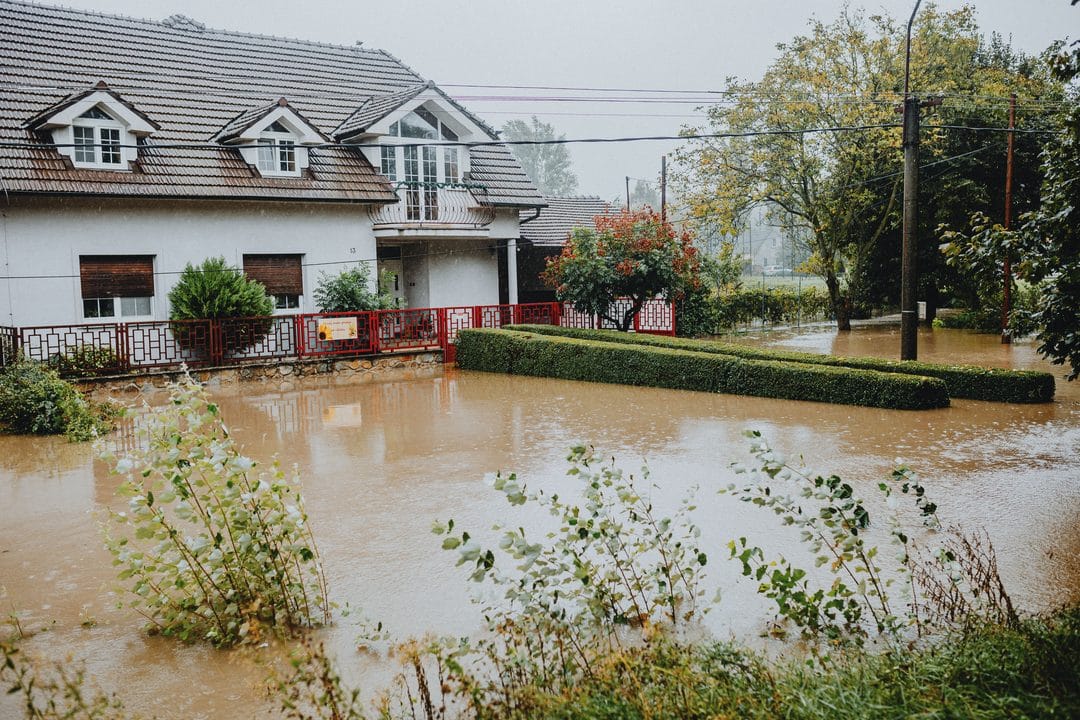
Why "Living Near a River" Isn't the Real Risk Category Anymore
Ask most UK homeowners whether they're at flood risk and they'll picture a house near a river or the coast. The Environment Agency's current data tells a messier story: roughly 6.3 million properties in England alone sit in areas with some level of flood risk, and a growing share of new claims come from surface water flooding after intense summer downpours — the kind that hit parts of the Midlands and the South East hard in recent Julys — rather than a river bursting its banks. If your postcode has ever appeared on a local flood alert, even once, it's worth checking your risk properly rather than assuming distance from water settles the question.
This matters for your insurance because flood risk changes what you pay, and sometimes whether you can get cover at all on the open market. Standard insurers price flood risk using postcode-level data from the same Environment Agency maps, and a property flagged as high-risk can see buildings insurance quotes jump by hundreds of pounds a year, or in the worst cases get declined outright by a mainstream insurer. That's the gap Flood Re was built to close, and most homeowners who'd benefit from it have never heard of it.
What Flood Re Actually Does
Flood Re is a reinsurance scheme, not an insurer you deal with directly. When you buy buildings insurance from a participating insurer — and that's the large majority of the UK household market, including Aviva, Direct Line, LV= and most of the names you'd recognise — and your property is flagged as flood-risk, the insurer can pass the flood element of your policy into Flood Re behind the scenes. You still get one bill, one renewal date, and one point of contact. What changes is that your premium for the flood risk portion is capped according to your council tax band, rather than priced purely on the statistical chance of your street flooding.
The bands run from Band A, capped at £220 a year for the flood-risk element, up to Band H, capped at £532. Everything above that cap is absorbed by the scheme, funded by a small levy — currently £12 per policy — added to household insurance premiums across the whole UK market, flood-risk or not. It's a genuinely redistributive piece of insurance policy, and it's one of the few schemes of its kind anywhere in Europe.
The Part That Trips People Up
Flood Re only covers homes built before 1 January 2009. New-build properties are excluded on the logic that anything built after that date should already have been designed with current flood-resilience standards and shouldn't need the subsidy. If you've bought a newer flood-risk property and your quotes seem unexpectedly high, this is usually why — and it's worth asking your insurer directly whether Flood Re applies to your policy before assuming the premium is simply the going rate.
Leasehold flats and most buy-to-let properties are also excluded, which catches out landlords who assume the scheme covers any residential property. If you're insuring a rental in a flood-risk postcode, budget for the full market-rate premium rather than the Flood Re-capped one, and shop specifically among landlord insurers who quote flood risk competitively — some do this far better than others.
Getting the Best Quote When You're in a Flood-Risk Postcode
Not every insurer participates equally well in Flood Re, and not every broker will automatically route you through it. Go through a broker who explicitly says they work with Flood Re-eligible insurers, or ask directly when you call — "does this quote use Flood Re?" is a fair question and a good one clarifies immediately. Comparison sites don't always surface the cheapest Flood Re-backed quote first, because their default sort is usually price before risk-adjustment, so it's worth getting at least one quote directly from an insurer known to participate actively, such as Aviva or LV=, alongside whatever the comparison site shows you.
- Check your specific flood risk on the Environment Agency's long-term flood risk checker before you even request quotes — it takes your postcode and gives a category, not just a yes/no.
- Ask whether resilience measures already fitted (raised electrics, non-return valves on drains, flood doors) qualify for a discount — some insurers apply one, most don't advertise it.
- If you've had a previous flood claim, disclose it accurately. Underinsuring by omission is grounds for a declined claim later, and it isn't worth the short-term saving.
What Actually Happens When You Claim
A flood claim runs differently from most home insurance claims, mainly because of scale — a burst pipe affects one property, a flood event typically affects an entire street or postcode at once, which stretches loss adjusters and repair contractors thin exactly when demand peaks. Report the claim as soon as it's safe to do so, take photographs before you move or discard anything, and ask your insurer about emergency accommodation cover early — most policies include an alternative accommodation allowance, but the amount and duration vary more between insurers than almost any other line in a home policy, and it's rarely the figure people check before buying.
Drying out a genuinely flooded property properly takes weeks, sometimes months, not days, and insurers increasingly use specialist drying contractors who monitor moisture levels with meters rather than eyeballing it — rebuilding too early, before the structure has actually dried, is one of the most common causes of recurring damp claims on the same property within a year or two. Push back if a contractor wants to start reinstatement work before moisture readings confirm the structure is dry; it's a legitimate question to ask, not an unreasonable delay.
Build Back Better: A Clause Worth Checking For
Some Flood Re-backed policies now include a "build back better" provision, funded by a small additional grant — currently up to £10,000 — that lets you install resilience measures during reinstatement rather than simply replacing what flooded with an identical, equally vulnerable setup. That can mean raised electrical sockets, non-return valves fitted to drains, or replacing chipboard flooring with a more flood-resistant alternative. Not every insurer offers this automatically, and it's rarely mentioned unless you ask directly at claim stage, so it's worth raising the question the moment a claim is agreed rather than assuming standard reinstatement is your only option.
An Uncomfortable Edge Case Worth Knowing
Flood Re itself is due to wind down by 2039, and premiums are expected to be reassessed on genuinely risk-reflective pricing from that point — which means homes in the highest-risk categories should start budgeting now for insurance costs that may rise sharply once the scheme's subsidy ends. That's thirteen years away, which sounds distant until you remember most mortgages run twenty-five to thirty-five years, and a lender will care about long-term insurability when you come to remortgage a genuinely flood-exposed property in the 2030s.
Buy the right cover now, keep your excess realistic rather than artificially low just to shave the premium, and revisit your policy every renewal rather than auto-renewing on the assumption nothing's changed — the Environment Agency updates its risk maps periodically, and a property that was low-risk five years ago isn't automatically still low-risk today.