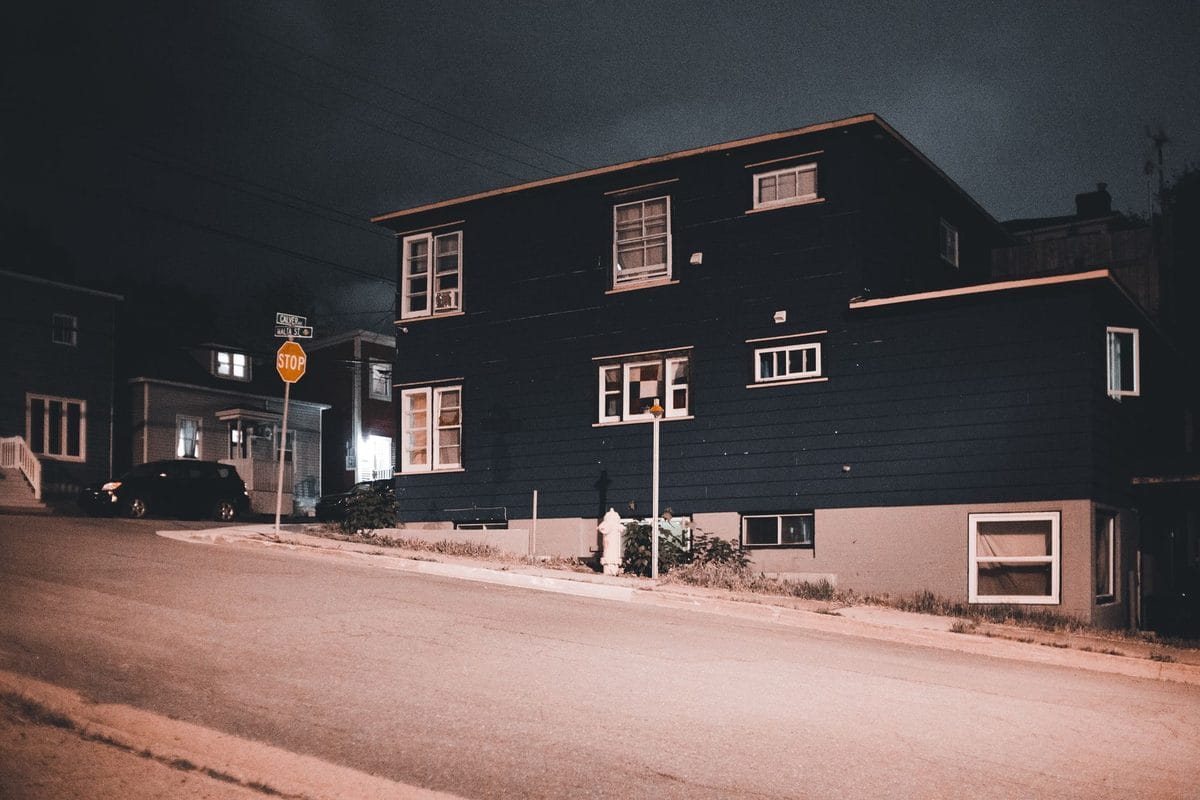
Half past five on a Tuesday evening in late October, and the street outside your house has already gone properly dark. That's not a coincidence of the calendar. British Summer Time ends on 25 October this year, the clocks go back an hour, and within days most of the country is doing the school run, the supermarket shop and the walk from the station in near-darkness. Police forces and insurers have flagged the same pattern for years: burglaries tend to tick upward once the evenings shorten, because an empty, unlit house is simply easier to read from the pavement than one with the telly flickering behind the curtains. If you've never had a break-in, the natural assumption is that home insurance just pays out when it happens. It doesn't always, and the reason has almost nothing to do with insurers being difficult for the sake of it.
What "No Sign of Forced Entry" Actually Means
Most standard UK contents policies, from Aviva and Direct Line through to Churchill and Policy Expert, contain a condition that theft claims need evidence of forced entry or exit — a splintered door frame, a cracked window pane, tool marks around a lock barrel. It sounds like a technicality until you're the one filing the claim and the loss adjuster's report comes back saying "no visible signs of break-in." Insurers use this condition to separate genuine burglaries from staged claims and, less charitably, from situations where a family member or acquaintance simply let themselves in. The clause exists because insurance fraud in Britain runs into hundreds of millions of pounds a year across all lines, and a theft claim with zero physical evidence is one of the easiest categories to fabricate. The Association of British Insurers, the trade body that effectively sets the industry's shared assumptions on risk, has long treated forced-entry evidence as the baseline test for genuine burglary, which is why almost every mainstream insurer's wording reads the same way on this point rather than varying case by case.
The catch is that plenty of real burglaries leave almost nothing behind. A skilled or lucky intruder who gets in through a window you'd genuinely forgotten to lock, or a door that was left on the latch rather than deadlocked, can walk out with your laptop, your jewellery and your passport without leaving a mark anywhere the insurer's assessor would call conclusive. In that situation you are, in effect, arguing against your own policy wording, and it's an uncomfortable position to be in when you know exactly what happened but can't prove it the way the small print demands. It's worth knowing that the Financial Ombudsman Service handles disputes exactly like this every year, and insurers don't automatically win them: if you genuinely locked up and a claim gets declined purely on "insufficient evidence of forced entry," escalating through the insurer's formal complaints process before accepting the decision is usually worth the fortnight it takes. Keep the crime reference number from the police, keep any correspondence, and ask the insurer in writing exactly which clause they're relying on — vague verbal refusals rarely survive a written challenge.
The Security Clause You Signed and Never Read
Underneath the forced-entry condition sits a second, broader one: the "reasonable care" or "reasonable precautions" clause, written into most UK contents policies under the framework the FCA polices through its Insurance: Conduct of Business Sourcebook. In plain terms, it means you agreed to lock all doors and windows and set any alarm whenever the property is left unattended — not just for a fortnight's holiday, but for an evening at the pub or a school pick-up. Leave a downstairs window on the latch for twenty minutes while you take the bins out, and technically you've already breached the exact clause that was supposed to protect you.
Few insurers actually void a claim over something that minor in practice. The FCA's Consumer Duty rules, in force since 2023, push insurers toward treating customers fairly rather than hunting for technical get-outs on marginal breaches, and a genuinely oversighted latch rarely sinks an otherwise straightforward claim. But it's a live risk factor rather than a hypothetical one, and it gets more relevant as the nights draw in and people leave for work before sunrise and get home after dark, handing a house far more hours of unobserved, unlit exposure than it had back in June.
Contents, Buildings, and the Split Nobody Explains at Renewal
A burglary usually damages two different things, and UK home insurance treats them as two different policies. The stolen items — televisions, jewellery, laptops, cash — fall under contents cover. The physical damage caused getting in, a kicked-in door or a smashed pane of glass, falls under buildings insurance instead. Homeowners who carry both, typically bundled together by insurers such as LV= or More Than, rarely notice the split until a claim forces them to work it out. Renters are the group who actually get caught out here: a tenant with contents cover but no buildings policy, because the landlord holds that half, can find themselves out of pocket for an emergency glazier's callout if the landlord is slow to act, even though the stolen TV itself is covered without any fuss. Leaseholders in flats face a similar gap when the front door to the block, rather than their own flat door, is the one that's forced — that's a communal buildings matter for the freeholder, not something a personal contents policy touches at all.
Jewellery and single high-value items carry their own limits, and this is where underinsurance quietly bites. Standard contents policies from mainstream insurers commonly cap unspecified single items at somewhere between £1,500 and £2,000 unless you've listed them individually and paid a bit more for the privilege. An engagement ring or a decent watch can blow straight through that cap, and most people only discover the shortfall at the exact moment they're trying to claim for it. If you own anything worth more than roughly a grand, list it by name on the policy schedule — don't assume the "up to £50,000 contents cover" headline figure on the box covers a single item at anything like its real value.
The Unoccupied-Property Trap Over Half-Term and Christmas
Tell your insurer if you're going away for an extended stretch this winter.
That single call or email matters more from late October onward than it did all summer, because October half-term and then Christmas travel a few weeks later are exactly when the next clause starts to bite. Most UK insurers define a property as "unoccupied" once it's been left empty for a set stretch — commonly 30 or 60 consecutive days, though Policy Expert and a handful of others tighten this specifically in winter, because empty pipes in an empty, unheated house are a far worse combination once temperatures drop toward freezing. Go away for a week's half-term break and you won't trip that clause at all. Go away for six weeks over an extended winter trip without telling anyone, though, and you might find cover for both burglary and escape-of-water claims has quietly lapsed the moment you crossed the threshold — and discovering that after a pipe has burst, rather than before you left, is the worst possible time to find out. Most insurers will simply note an extended absence on the file at no extra charge, provided someone checks the property periodically and the heating stays on low rather than off completely.
Smart Locks, Doorbell Cameras and the Discount Nobody Volunteers
Ring and Yale doorbell cameras have become common enough on British front doors that insurers have started factoring them into risk pricing, though rarely loudly. A handful of insurers, including LV= and Hastings Direct, will shave a percentage off the premium for a monitored alarm system fitted by an NSI- or SSAIB-accredited installer — the same accreditation bodies police forces recognise for response callouts. The saving usually isn't advertised at renewal; you generally have to ask for it directly, quote the accreditation, and sometimes provide the installation certificate before it gets applied.
- A monitored Ajax or Yale Sync alarm system, professionally installed and NSI- or SSAIB-accredited, is the single upgrade most likely to earn an actual premium discount rather than just peace of mind.
- Doorbell footage won't usually reduce your premium on its own, but a visible camera does generate exactly the kind of timestamped evidence insurers and the Financial Ombudsman Service treat as strong support in a disputed claim.
- Five-lever mortice locks meeting British Standard BS3621 are what most insurers actually mean by "adequate locks" in the small print, and a cheap rim latch on its own generally doesn't qualify, whatever the front door looks like from the street.
What Actually Deserves Doing Before the Clocks Go Back
Photograph your valuables now, not after something's gone missing. Insurers ask for proof of ownership far more often than people expect after a burglary — a receipt, a serial number, a dated phone photo of the ring on your hand — and reconstructing that list from memory after the event is exactly where legitimate claims get whittled down for lack of evidence. It's a five-minute job with a phone camera, and it's worth doing this weekend rather than waiting until it matters.
Check what your excess actually is before you need to use it, too. A standard £250 excess on a laptop worth £400 barely makes a claim worthwhile, and reporting a small theft you decide not to claim for in the end can still sit on your record at some insurers separately from a paid claim, nudging the next renewal quote up regardless. Work out roughly what you'd actually recover before you pick up the phone, not after the loss adjuster's already been round.
None of this guarantees a smooth claim if the worst happens — insurers still decline a meaningful share of theft claims every year, and the paperwork genuinely is more forgiving to the well-prepared than to the unlucky. But between now and 25 October, checking your locks meet BS3621, listing anything worth more than a grand by name, and telling your insurer about any extended winter trip costs nothing and closes off the three most common reasons a burglary claim gets fought rather than paid.