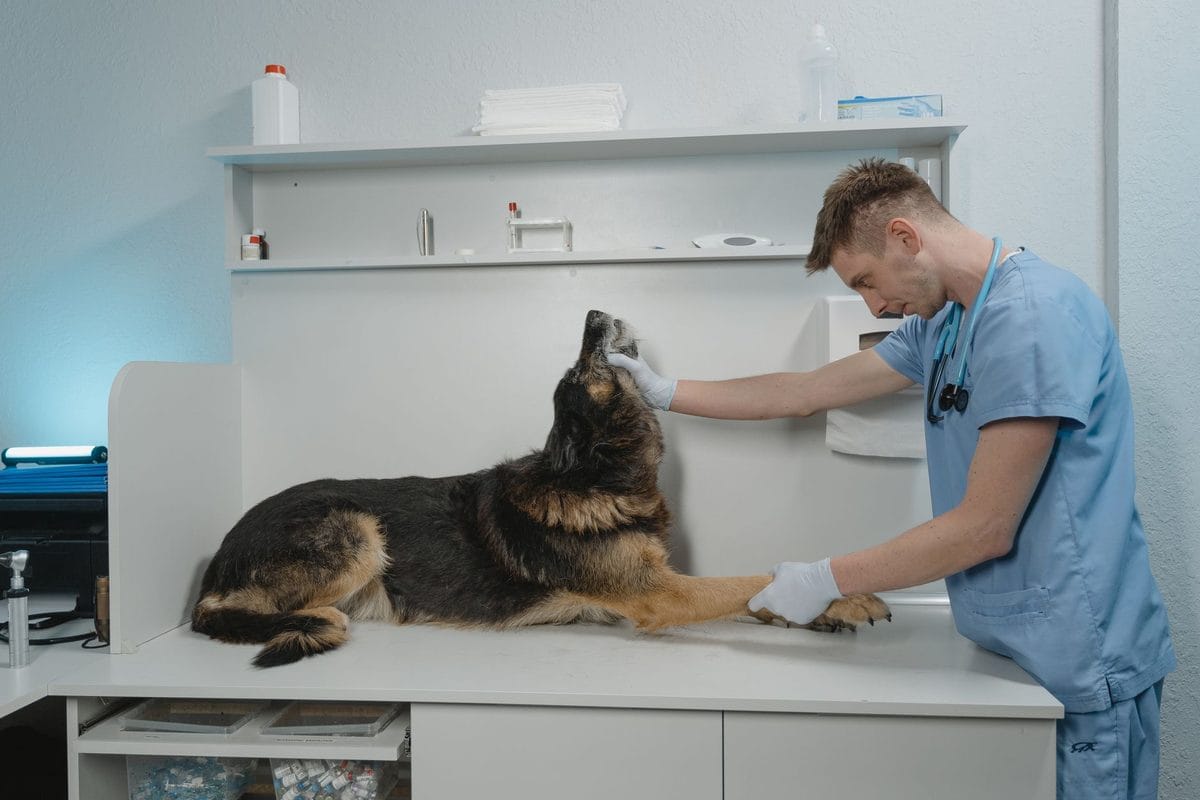
Your dog needs a second cruciate ligament operation. The vet's estimate is £4,200. Your policy paid out £3,000 on the first knee eighteen months ago — and because that was a "linked condition" claim, this bill lands against whatever's left of last year's benefit limit, not this year's. If you're on a maximum benefit or time-limited policy, that gap is coming out of your own account. If you're on lifetime cover, it isn't.
That single difference — what happens when the same condition comes back — is the one thing most UK pet owners get wrong when they buy a policy on price alone. Insurers sell four broad types of cover, and the names sound similar enough that comparison sites routinely present them side by side as if they're interchangeable. They aren't.
The four types of cover, and what actually changes between them
Lifetime cover resets your claim limit every renewal, for the life of the policy, for every condition — including ones you've already claimed for. Say your policy carries a £6,000 annual limit per condition. Claim £3,000 for a hip problem this year, and on renewal that £6,000 is available again for the same hip, every year, for as long as you keep renewing without a gap. This is the only structure that properly covers chronic and recurring illness: diabetes, allergies, arthritis, the kind of conditions that don't resolve, they just get managed.
Maximum benefit cover sets one lifetime limit per condition — commonly £2,000 to £4,000 — and once you've claimed that much for, say, skin allergies, that condition is finished for the rest of the policy's life. No annual reset. On a young, healthy animal this looks affordable for the first couple of years and then quietly stops covering anything that matters.
Time-limited cover caps a condition at both a cash amount and 12 months from the first claim, whichever comes first. After that, the condition becomes pre-existing and is excluded for good. It suits genuinely one-off injuries — a broken leg from a fall, a foreign-body swallow — but it's the wrong shape of policy for anything that could recur.
Accident-only cover is exactly what it says: road traffic injuries, falls, swallowed objects. No illness cover at all. It's cheap, sometimes under £10 a month, and for owners who've decided to self-insure against illness and only want a safety net against sudden trauma, that's a defensible position. Just don't buy it thinking it's a budget version of full cover — it's a different product entirely.
Why lifetime costs more, and why it's usually worth paying
Expect to pay 30–60% more for lifetime cover than maximum benefit on the same animal. A young Labrador might cost £22 a month on maximum benefit and £34 a month on lifetime with Petplan or Agria. That gap closes fast the moment a chronic condition shows up, because maximum benefit's per-condition ceiling doesn't move — inflation in vet costs does. Referral-level orthopaedic and oncology treatment in the UK has been rising well ahead of general inflation, and a £3,000 ceiling set five years ago buys noticeably less specialist care today than it did when the policy was written.
Buy lifetime cover if there's any realistic chance the animal develops something ongoing — which, statistically, is most animals past the age of seven. Don't buy maximum benefit for a dog you intend to keep for its full life expectancy; it's the wrong tool for that job, and no amount of shopping around on price fixes the structural mismatch. Where maximum benefit earns its place is on an older rescue animal you're insuring mainly against acute injury, where the premium saving is real and the chronic-illness risk is one you've already decided to carry yourself.
Excesses and co-payments — where the real cost sits
Every claim carries a fixed excess, typically £75–£250, taken off the top regardless of the bill. On top of that, most mid-tier and budget lifetime policies add a percentage co-payment once the animal passes a certain age — commonly 20% of each claim from age eight or nine onwards. A £2,500 bill with a £120 excess and a 20% co-payment leaves you paying roughly £596 out of pocket, not £120. Insurers rarely lead with this number in their marketing.
What to check before you sign
- The age at which co-payment starts, and whether it steps up again later (some policies add a second tier at 12 or 13)
- Whether the excess is per condition per year or per claim — per-claim excesses on a dog with a flare-up condition add up fast
- Whether dental illness sits inside the main limit or has its own, much smaller sub-limit (often £500–£1,000, and frequently the first thing owners get caught out by)
Pre-existing conditions: the exclusion that follows the animal
Any vet visit recorded before the policy started, or during the first 14 days of it, can be treated as pre-existing and excluded — permanently, on every insurer you move to afterwards, because they all check the animal's clinical history through Vetsure or SAVIC-style data sharing when you claim. This is why switching insurer to chase a cheaper renewal quote is riskier than it looks: any condition that's shown up since your last policy started becomes uninsurable the moment you move, even if the new insurer's headline price is lower.
Some insurers offer "continuation" cover that recognises a pre-existing condition already covered by your previous policy, provided there's no gap in cover. It's worth asking about explicitly — brokers don't always volunteer it, and it can be the difference between keeping cover for an ongoing condition and losing it entirely by switching.
Breed is doing more work in your premium than you'd expect
Flat-faced breeds — French Bulldogs, Pugs, British Bulldogs, Persian and Exotic cats — carry premiums 40–80% above a similarly sized mixed-breed animal, and the reason isn't marketing, it's claims data. Brachycephalic Obstructive Airway Syndrome surgery routinely runs £2,000–£4,500, cherry eye correction another few hundred, and these breeds also see elevated rates of spinal disease, skin fold dermatitis and heatstroke. A French Bulldog on lifetime cover with a mainstream UK insurer commonly sits between £70 and £110 a month by age five; a Labrador of the same age on the equivalent policy is typically £35–£55. If you already own a flat-faced breed, don't try to cover the gap with a cheaper maximum benefit policy — BOAS surgery alone can exhaust a £3,000 lifetime-per-condition limit in one operation, and there's a real chance of needing it more than once.
Cats and dogs are not the same risk, and the policy shouldn't be either
Dogs generate more claims for trauma and orthopaedic surgery — cruciate ligament injury alone accounts for a meaningful share of large-breed claims, and cruciate repair runs £2,500–£4,500 per knee, often needed on both within a couple of years. Cats generate more claims for chronic and internal conditions: chronic kidney disease, hyperthyroidism, diabetes, dental disease. None of these show up as a single dramatic bill; they show up as a recurring one, which is precisely the scenario lifetime cover is built for and maximum benefit is built to fail at. Outdoor cats add road traffic accidents and cat-fight abscesses to that list, and if yours goes outside at all, it's worth checking the policy actually covers third-party liability — a cat that causes a road accident isn't a hypothetical, insurers price for it.
How to actually choose
- Get quotes for lifetime cover first, from at least three of Petplan, Agria, ManyPets, Animal Friends and Direct Line — the price spread on identical cover is often 25% or more for the same breed and postcode
- Check the co-payment start age and the dental sub-limit before comparing headline premiums — two "lifetime £6,000" policies are not equivalent if one starts co-payment at eight and the other at eleven
- If cost genuinely rules out lifetime, accident-only plus a dedicated savings pot beats maximum benefit for most owners — you keep the money maximum benefit would have taken as premium, and you're not locked into a ceiling that stops covering the condition it was sold to cover
- Insure while the animal is young and has no claims history — premiums only go up with age, and every year you wait is a year of clinical history that can later be excluded as pre-existing
None of this is a case for the cheapest policy on a comparison site, and it isn't a case for the most expensive one either. It's a case for reading the per-condition limit, the co-payment age and the exclusion clause before the direct debit is set up — because that's the only point at which you still have a choice about it.