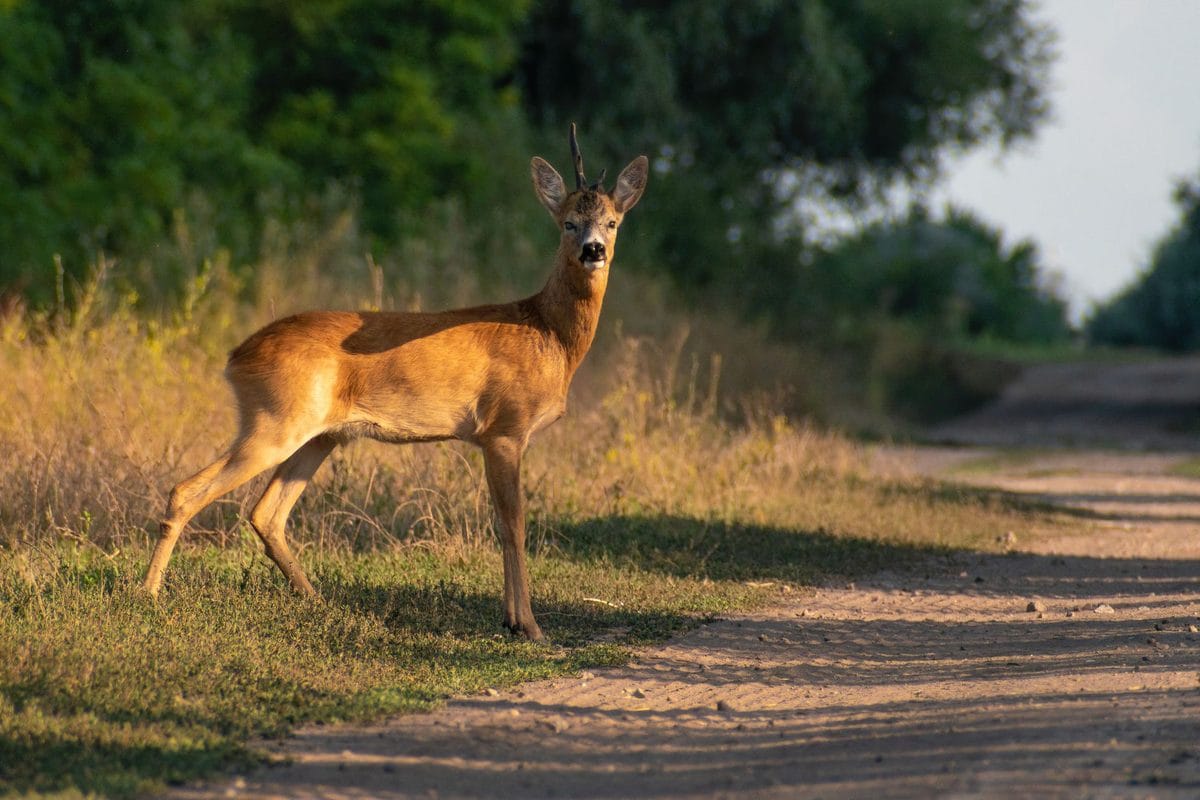
It is ten to five on a wet evening in early November, the lane runs through woodland, and a pair of eyes catches your headlights at the verge a moment too late. One deer steps out, then a second, and the next two seconds decide whether you drive home or wait for recovery beside a crumpled bonnet. Most drivers have never rehearsed what follows, yet the choices made in the next hour, what you photograph, whom you ring and whether you claim at all, affect the repair bill and, quietly, next year's premium.
The timing matters more this year than it might seem. The clocks go back on Sunday 25 October, and from the following day sunset in London arrives a little before 5pm, which puts the evening commute squarely inside the hours when deer are most active.
Why October to December is the dangerous stretch
The British Deer Society says collisions peak from October through to December and again in May, with the highest-risk hours running from sunset to midnight and around sunrise. The autumn peak is tied to the rut, when deer move around far more than usual, and it collides with shorter daylight: the RSPCA notes that risk climbs when rush hours coincide with the dawn and dusk peaks in deer activity. Nobody knows the true total, and the Society says so, but it estimates that more than 40,000 deer are killed or injured on UK roads each year and the figure may be nearer 74,000. The RSPCA puts vehicle damage at no less than £17 million a year. In England the species most often involved are fallow (40 per cent, according to the RSPCA), roe (32 per cent) and muntjac (25 per cent), and none of them is confined to the Highlands: the RAC's Simon Williams has pointed out that deer can turn up anywhere in the countryside or on the edge of a town.
What a deer strike costs
The best published figures come from Zurich UK, and they are narrower than the headline suggests: claims made in April and May only, from one insurer.
| Year (April and May claims) | Zurich deer claims | Average cost |
|---|---|---|
| 2019 | 26 | £2,682.98 |
| 2021 | 45 | £3,315.10 |
| 2023 | 58 | £4,322.58 |
| 2024 | 63 | £4,317.24 |
Zurich blamed rising parts and labour costs and projected the 2025 average at £4,584. Autumn averages have not been published in the same way, so treat £4,300 as a marker for a direct hit rather than a promise: a glancing blow to a bumper costs less, a deer over the bonnet and into the windscreen can cost more. On an older small car, a £4,000 repair bill can exceed what the car is worth, in which case the insurer writes it off and pays the market value, less your excess.
Which policies actually pay
Only fully comprehensive cover pays to repair your own car after you hit a deer.
A third-party-only policy pays for the damage you do to other people and their property, and third party, fire and theft adds cover for your car being stolen or set alight. A deer collision is none of those things. It is accidental damage to your own vehicle, and wild deer belong to nobody, so there is no owner and no owner's insurer to pursue. If you drive woodland roads at dusk on a cheaper policy, the whole bill is yours, because there is nobody else to send it to.
The picture changes if the animal had an owner. The AA and the RAC both say that with a pet or farm animal your insurer may decide the owner was at fault and try to recover its costs from them, for instance where a gate was left open.
The no-claims discount problem nobody mentions at renewal
The Financial Ombudsman Service defines a fault claim as one where the insurer has not been able to recover its costs from another party, which includes accidents that were not the driver's fault but whose cost cannot be claimed from anyone else. A deer has no insurer, so a deer claim fits that definition neatly even though you did nothing wrong. The Ombudsman says a fault claim is likely to reduce an unprotected no-claims bonus, normally by two years, and that insurers should set out in the policy how any reduction is applied. Four years of unprotected discount becomes two. The AA's guidance says the same thing in plainer words: claim for a wild-animal collision and you are likely to lose the discount unless it is protected, and you pay the excess as well.
Protection helps, but only so far. It generally preserves the years rather than the price, and the Ombudsman lists "protected my bonus but my premium still went up" among the complaints it sees, so a deer claim can still make renewal dearer. Policies also tend to limit how many claims protection will absorb in a given period, which is worth finding in your own documents today rather than on a verge in the dark. Practice is not identical across insurers, either: the RAC notes that with a wild animal your provider may decide no one was liable. If a deer claim has been recorded in a way you think is wrong, ask the insurer to explain it in writing; the Ombudsman does take complaints about fault claims recorded when the driver was not to blame.
Claim, or pay for it yourself?
Suppose a glancing hit cracks a bumper and a grille and the garage quotes £900. If your total excess is £400, the insurer pays at most £500, and in return you may be carrying a fault claim and two fewer years of discount. On those numbers, paying the garage yourself is the better choice. Change the quote to £3,500 and the sum reverses completely.
Whatever you decide about claiming, tell your insurer about the incident. The RAC says most policies require you to report any accident even when you do not plan to claim, and the Ombudsman warns that an insurer can cancel a policy or refuse a later claim if an incident was not disclosed. A report with no claim attached should be recorded as notification only, which should not reduce your discount, although the incident can still push the premium up at renewal, because insurers read any incident as a signal that more claims may follow. Admiral's claims guide, for one, asks for any incident to be reported within 48 hours, so check your own policy booklet for its deadline.
The first ten minutes at the roadside
The British Deer Society lists the priorities in order, and the order is the useful part. The steps below follow its list, with a few additions from Zurich and the RSPCA.
- Keep yourself and your passengers safe, get the car to the safest place you can, and put the hazard lights on.
- Call an ambulance if anyone is hurt, then call the police, giving the most precise location you can; the what3words app helps on unlit country lanes.
- Leave a live deer alone. It may bolt across traffic and cause a second crash, and Zurich's guidance warns that an injured animal can scratch or bite.
- If the animal is injured, the RSPCA runs a 24-hour line on 0300 1234 999 in England and Wales.
- Photograph the damage, the scene and, from a distance, the deer, and write down the time, the place, the weather and any witness names, among other details, before you drive off.
If you have a dashcam, save the clip the same evening, before the card loops over it. Then look at the car properly before you set off: a coolant leak, a headlight out, a bonnet that will not latch or a warning light on the dash means calling your breakdown provider rather than limping home. What you save by driving a damaged car home is small next to the cost of the engine it overheats.
Do you have to report it to the police?
Not by law, and that surprises people. Section 170(8) of the Road Traffic Act 1988 defines "animal" for reporting purposes as a horse, cattle, ass, mule, sheep, pig, goat or dog, and deer are not on the list; the Highway Code's Rule 286 points back to that section. In a Yonder poll of 13,481 AA members in September 2025, around half thought they had to report a deer strike, so the misunderstanding is common.
Ring anyway if the deer is injured or in the carriageway. The police can send someone with the right equipment, the highway authority deals with a dead animal on the road, and the call puts a time and place on record. Both the RSPCA and the British Deer Society also ask drivers to log the collision, and you can do it through the Society's Deer Map app or the Deer Aware website. It takes two minutes, and the Society says many collisions go unreported, which leaves the hotspot data poorer than it should be.
Brake, don't swerve
The Society's advice is "don't veer for deer": if a collision looks unavoidable, hitting the animal while you keep full control is safer than swerving into oncoming traffic or off the road. Brake hard in a straight line, but only if the road behind is clear, and put the hazards on. There is a cost argument as well as a safety one, because the RAC warns that if you swerve and hit another car you may be at fault, and a crash with another vehicle is a far bigger problem than the one you were trying to avoid.
Use full beam when the road is empty, since it picks out the animals' eyes, but dip it the moment you see a deer, because a startled animal in a bright beam tends to freeze rather than leave. Treat one deer as a warning about the next, because they often cross in groups. The RSPCA's reminder for stretches such as the New Forest and Ashdown Forest is that it is "forty for a reason".
Before the clocks change on the 25th, find three lines in your policy documents: the type of cover, the total excess, and whether your no-claims discount is protected and how many claims that protection covers. Do it tonight, on the sofa.