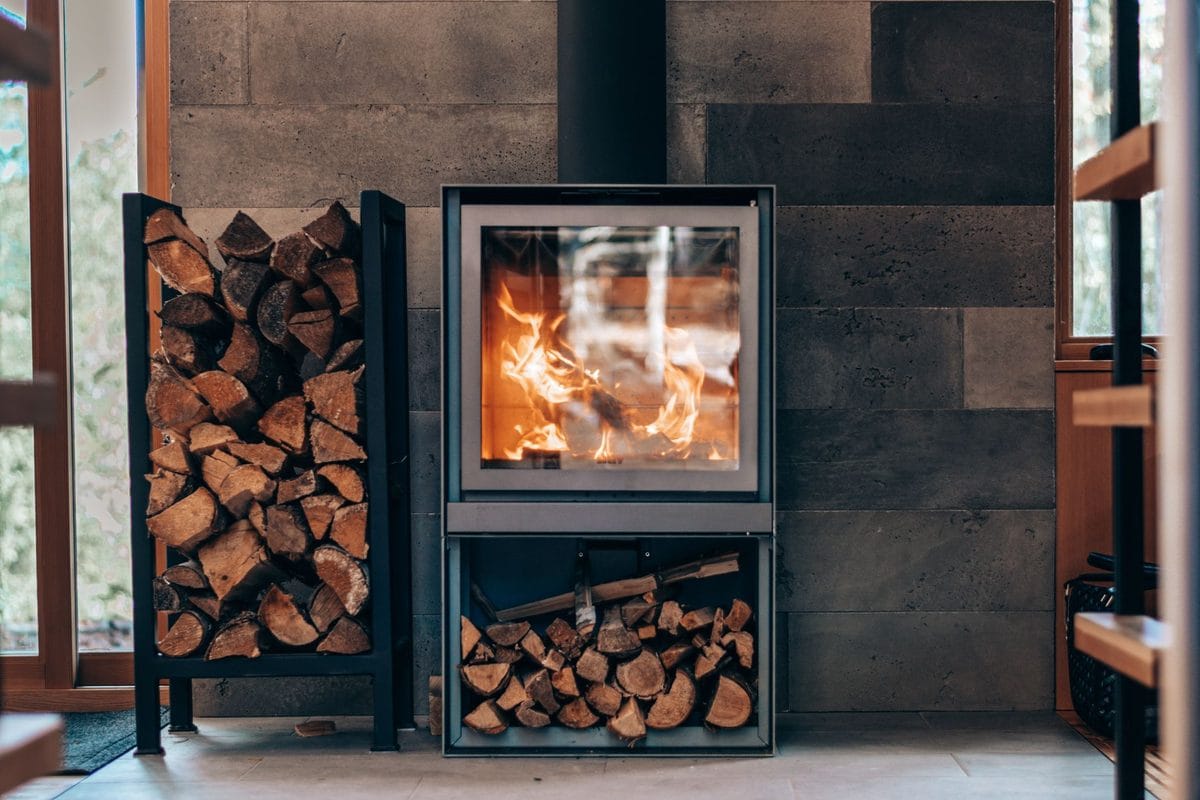
The first properly cold evening of the autumn arrives, the stove has sat dead since March, and there is a bag of kindling by the hearth. Before the match goes in, it is worth knowing what your home insurer would ask if the chimney ever caught fire: when the flue was last swept, who installed the stove, and whether the insurer was told it exists. If your answer to the first question is "roughly", you are in a weak position when a claim is on the table.
Timing matters this month. HETAS, the organisation that registers stove installers and approves chimney sweeps, says September to November is the busiest period for sweeps and that by November you may be waiting several weeks for an appointment. Aviva's winter-ready checklist gives the same advice in fewer words: sweep before you light your fire or stove.
What home insurance pays for, and what it expects from you
Fire damage is covered in principle under a standard home policy. The difficulty sits in the conditions around the cover. Aviva has said that home insurance is usually designed for sudden, unexpected events and that wear and tear is generally excluded, and policies commonly add a duty to take reasonable care of the property. One wording the Ombudsman has quoted reads: "You and your family must ensure that all reasonable precautions are taken to avoid injury, loss or damage... The insured property must be kept in a good state of repair."
LV= advises customers with an open fire or log burner to tell their insurer, and to have chimneys cleaned and inspected each year before the first fire of the season. Treat that as your baseline even if your own insurer has not spelled it out. Telling the insurer is a five-minute call, whereas finding out afterwards that you should have is a much longer conversation.
A log burner nobody had swept since 2020
An unswept flue was enough, in one Ombudsman case, to sink a fire claim.
In a 2024 decision (reference DRN-4833498), a couple's summer house suffered extensive fire and smoke damage in December 2023. The log burner had been fitted with a new chimney in 2020, it was used at least weekly through the winter months, and the flue had never been swept. Advantage Insurance declined the claim under the condition quoted above, and its agents concluded that the fire most likely started from a build-up of soot and debris. The Ombudsman did not uphold the complaint, noting that there is an expectation that log burners and flues will be checked regularly and that nobody had produced a professional opinion to the contrary. The couple had argued that nobody told them an outbuilding stove needed sweeping, which did not change the outcome. The building was a summer house rather than a main home, but the reasoning rested on how the flue had been looked after, not on where it stood.
Why a sweep certificate still does not cover everything
A recent sweep proves the flue was cleaned. It does not prove the chimney stack is sound, and a second decision (DRN-5289534, from early 2025) shows the gap. A homeowner noticed chimney damage in September 2023 and claimed on his buildings policy with Highway Insurance; asked for proof of the last flue cleaning, he supplied a receipt from January 2023. Highway's surveyor found cracked render, deteriorated pots and repeated patch repairs, and the insurer declined the claim as gradual deterioration, which the policy excluded as "wear and tear that you know is happening gradually over time". The Ombudsman noted that an online street-view photograph from October 2021 already showed the cracking, roughly two years before the claim, and did not uphold the complaint.
So pair the sweep with an annual service, and act on what the sweep finds. HETAS says a CCTV inspection of the flue, useful when you have just moved in, typically adds £50 to £100 to the visit.
How often to sweep, and what it costs in 2026
HETAS recommends sweeping at least twice a year when you burn wood and at least once a year when you burn smokeless fuel, with a service at least annually to the manufacturer's requirements. The best times are just before the heating season and after a long period of disuse; a second sweep belongs after the peak of winter. Your policy may set its own interval, so follow whichever is stricter.
A standard sweep costs £60 to £85 in 2026, according to HETAS, with a UK average of about £72: London averages £82, the East Midlands £60. For that you should get the sweep, a visual check of the flue and connections, and a certificate recording the work and any findings. Extras are where bills climb.
| Job | Typical extra (HETAS, 2026) |
|---|---|
| Heavy soot or creosote needing power sweeping | £50 to £100 |
| Bird's nest or other blockage | £100 to £200 |
| Open fire or inglenook | £35 to £50 |
| Difficult access | £30 to £100 |
| CCTV flue inspection | £50 to £100 |
Pay the £72. HETAS warns that quotes under £40 tend to cut corners on the time spent, the visual check, the sweep's own insurance and the certificate, and it says an insurer is unlikely to accept a handwritten receipt or a text message as proof. The certificate is the thing you are buying.
The paperwork that proves the stove was fitted properly
The second document an insurer or a buyer's solicitor may ask for is the installation certificate. When a HETAS-registered installer fits a stove in England or Wales, the work is notified through HETAS to the local authority's building control department, and a Certificate of Compliance should reach you within about two weeks. HETAS says notifying these installations has been a legal requirement since 2005, and that the certificate can be required to validate your home insurance. A replacement costs £36 including VAT.
If you inherited a stove with the house and found no paperwork, HETAS suggests asking a HETAS Registered Installer whether the installation can be recommissioned and notified, though some refuse unless they remove and refit the stove. The alternative is a retrospective sign-off from the council's building control, which not every council offers. Get at least three quotes.
Keep these together in one folder:
- The Certificate of Compliance for the installation
- The appliance's instruction manual, which the manufacturer can often supply again if yours has gone missing
- Your latest chimney sweeping certificate
- The servicing record, so the next technician can see what has already been done to the stove, and whatever else the installer left behind
Two smaller points belong in the same folder: the alarm and the fuel. HETAS says every log burner and multifuel installation must have a working carbon monoxide alarm in the room, with requirements that differ between England, Scotland and Wales. On fuel, HETAS surveyed more than 2,300 stove owners: 75 per cent felt very confident they used the stove correctly, yet almost one in six admitted burning something they should not, from cardboard and old pallets to household rubbish. HETAS's own summary is that most chimney fires trace back to one of two things, what is being burned or how long it has been since the last sweep.
Telling your insurer, and what happens if you do not
When a home insurer asks whether the property has a wood burner or open fire, your answer goes into the contract. The Consumer Insurance (Disclosure and Representations) Act 2012 requires you to take reasonable care not to make a misrepresentation when you take out, renew or change a policy. If you get it wrong, the remedy depends on how you got it wrong and on what the insurer would have done with the right answer. A deliberate or reckless misrepresentation lets the insurer avoid the policy and refuse every claim without returning the premiums. A careless one is treated more gently, and there are three outcomes. If the insurer would not have offered cover at all, it can avoid the policy and refuse claims but must return the premiums; if it would have offered different terms, the policy is treated as having those terms; and if it would simply have charged more, it can cut the claim in proportion.
The proportionate cut is plain arithmetic. Suppose you paid £320 and the insurer would have charged £400 had the stove been declared: it may pay 80 per cent of a covered claim, so a £10,000 fire claim would pay £8,000. Those figures are invented to show the sum, not a real quote, and the insurer has to show it would have acted differently before any of this applies. Declare the stove and compare quotes with it declared. If you fit one part-way through a policy year, ring the insurer then rather than waiting for renewal.
If the insurer refuses the claim
Insurers must handle claims promptly and fairly and must not unreasonably reject them; that is the FCA's rule at ICOBS 8.1.1R. For policies taken out or varied since 1 August 2017, rejecting a claim for breach of a condition is unreasonable unless the circumstances of the claim are connected to the breach, subject to the Insurance Act 2015. Section 11 of that Act goes further for terms meant to reduce a particular kind of risk: if you can show the breach could not have increased the risk of the loss that actually happened, the insurer cannot rely on it. A fire that starts with an electrical fault in the kitchen while your flue is overdue for sweeping is therefore a different claim from one that starts in the flue, as it did in the first Ombudsman case.
If the answer is still no, ask the insurer to name the clause it relies on, in writing, and complain formally. The insurer then has up to eight weeks to give a final response, and you have six months from the date on that letter to take the complaint to the Financial Ombudsman Service, which is free and does not require a lawyer or a claims management company. Go in with realistic expectations, because both decisions above went the insurer's way: there was no sweeping record in one, and the evidence pointed to gradual damage in the other.
Book the sweep this week and ask for the certificate to be emailed to you. Forward it to yourself under a subject line you will remember, because a paper copy kept in the kitchen drawer can burn with the house and an email will not.